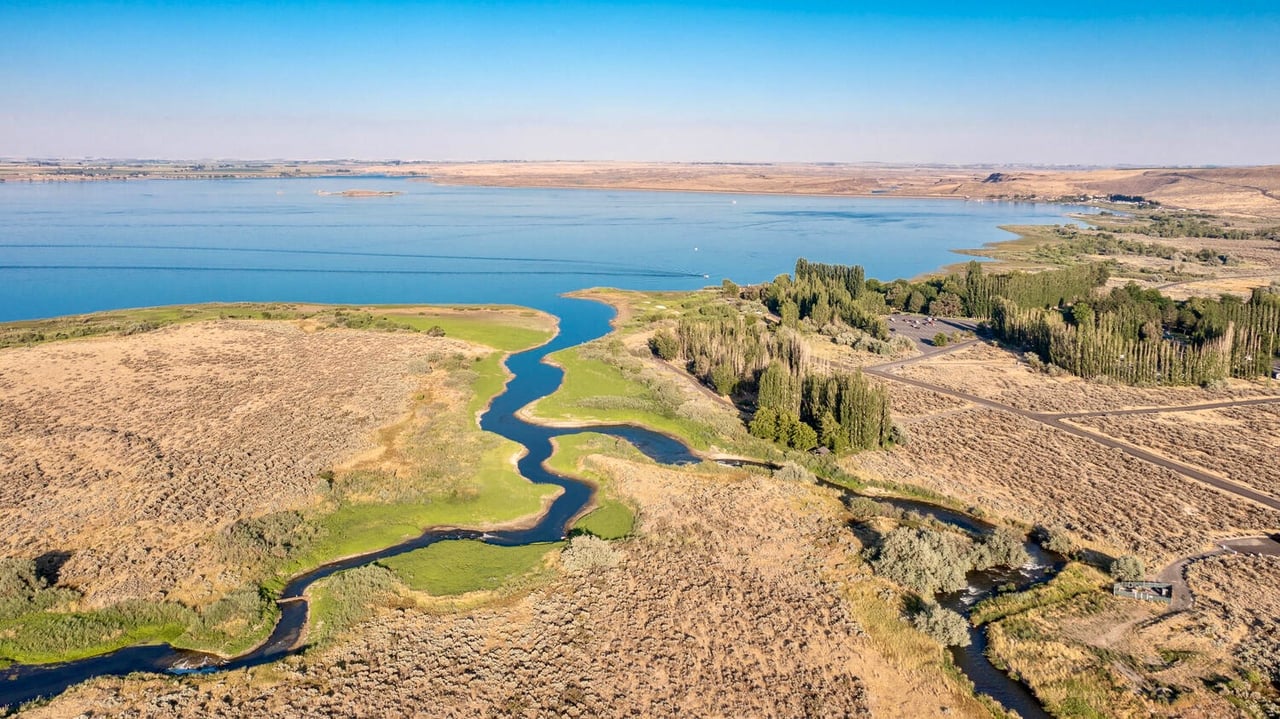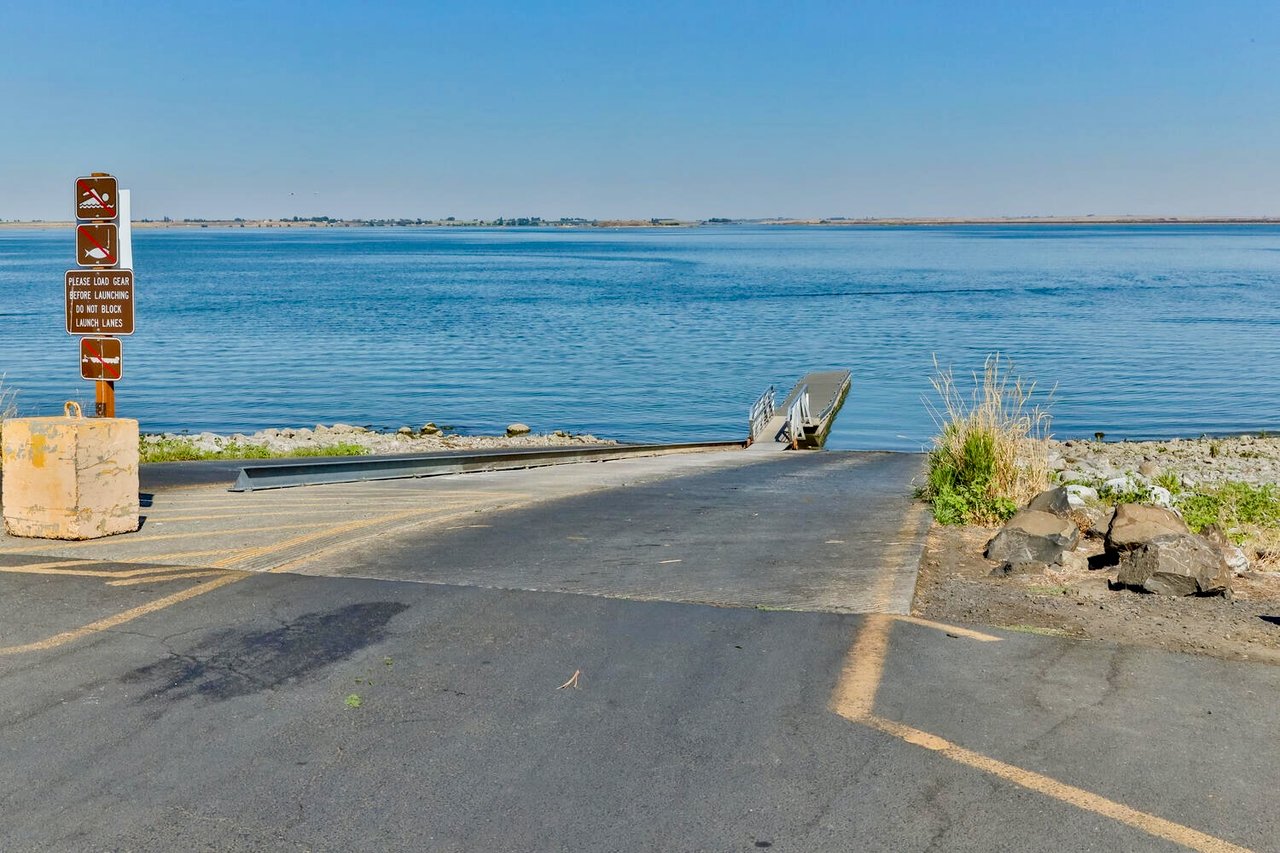
If you've walked out to the dock at MarDon Resort this week, you've probably noticed the waterline sitting lower than it did over the Fourth of July. The sand dunes that were half-submerged in June are showing more shoulder now. The channels behind them are shallower. If you're new to Mardon, this looks like a problem. If you've been coming here for a few seasons, you already know it isn't one. It's the same thing that happens every year, on a schedule nobody posts anywhere, and it's actually the reason the next six weeks of fishing tend to outperform the peak of summer.
The Reservoir Runs on a Contract, Not the Weather
Potholes Reservoir isn't a natural lake behaving unpredictably. It's a working reservoir built by the Bureau of Reclamation as part of the Columbia Basin Project, held back by O'Sullivan Dam, and operated to a set of irrigation obligations that have nothing to do with whether it's a wet year or a dry one. The reservoir fills through the winter and early spring, then gets drawn down from May through September as water moves out through the Potholes East Canal to serve the Columbia Basin and South Columbia Basin irrigation districts. That's the whole mechanism. It's contractual, not seasonal weather.
You can watch the number move in real time if you know where to look. One of MarDon Resort's posted fishing reports this season had the reservoir sitting at 1037.25 feet and falling roughly 1.6 feet in a single week. A report from a prior season logged the lake at 1038.2 feet in early July, also dropping about 1.6 feet that week, which is the same pace showing up again this year. Full pool for Potholes runs around 1042 feet. So somewhere between full pool and late summer, the lake typically gives up four to five feet of depth, and it keeps dropping into September. That's not a rounding error on a reservoir this size. It's the entire basin along the dune faces losing its shallow water first.
Falling Water Doesn't Scatter the Fish. It Concentrates Them.
Here's the part that surprises people who assume low water means bad fishing. MarDon's own tackle shop reports describe the opposite pattern: as the reservoir drops through late summer, fish get flushed out of the interior of the sand dunes and pushed to congregate along the face of the dunes, where the water is still deep enough to hold them but the structure is compressed into a smaller footprint. Instead of fish spread across acres of flooded dune channels, you get walleye, bass, perch, and bluegill stacking up in a predictable band along the dune edges, easier to locate and easier to pattern than they were in June.
Washington Fish and Wildlife's own notes on the reservoir back this up species by species. Perch fishing actually improves through fall as the water cools and vegetation dies back, pushing baitfish into the open. Rainbow trout fishing tends to get very good in the fall months, and the cooperative net-pen program that WDFW runs with MarDon releases 50,000 sub-catchable rainbow trout each year that grow quickly in the reservoir and are commonly 12 inches or better by the time autumn arrives. Whitefish are the one species that takes a short breather in October as they head toward spawning water, but that's the exception, not the rule.
None of this means the reservoir is easier to fish blind. It means the same water that felt enormous in July starts acting like a much smaller lake, and the smaller the target, the more a Saturday afternoon on the water actually pays off.
Which Boat Launches Keep Working as the Lake Shrinks
Not every ramp on Potholes handles a four-foot drop the same way. The concrete, multi-lane public ramps, Potholes State Park's five-lane launch, the Blythe access site, and Sampsons Pit, along with MarDon Resort's own marina, are the ones built to track a falling shoreline and stay usable well into fall. Smaller, unimproved gravel access points are the first to go dry or turn into a mud walk as the level drops. If you're used to a favorite put-in from earlier in the summer, this is the month to double check it before you trailer out, rather than assume July conditions still hold in September.
The Same Drawdown Pulls in the Birds Before the Hunters Show Up
The falling water does something else worth knowing if you spend any time walking the shoreline instead of fishing it. As the reservoir drops, it exposes mudflats along the exposed dune edges, and those flats draw shorebirds almost immediately: sandpipers, stilts, plovers, and curlews start working the mud within days of it surfacing. This is a documented pattern at the reservoir, not a one-off.
It also lines up with a narrower window at the Columbia National Wildlife Refuge just south of the reservoir near Othello. Birding at the refuge is most productive from March through June and again in September, right before roughly two-thirds of the refuge closes seasonally from October through February to protect wintering waterfowl. That means the next few weeks are genuinely a better stretch for birding at the refuge than most of the fall and winter that follows, a fact easy to miss if you assume waterfowl season is when the birds show up. Waterfowl themselves stack up later, with Royal Lake on the refuge hosting its heaviest concentrations from October through April, well after the September shorebird window on the mudflats closes out.
Put the two together and Potholes in September is doing something most visitors never clock: a receding shoreline exposes food for shorebirds at the same time it's compressing gamefish into fishable structure, all driven by the same canal gates.
What This Actually Means for the Next Few Weekends
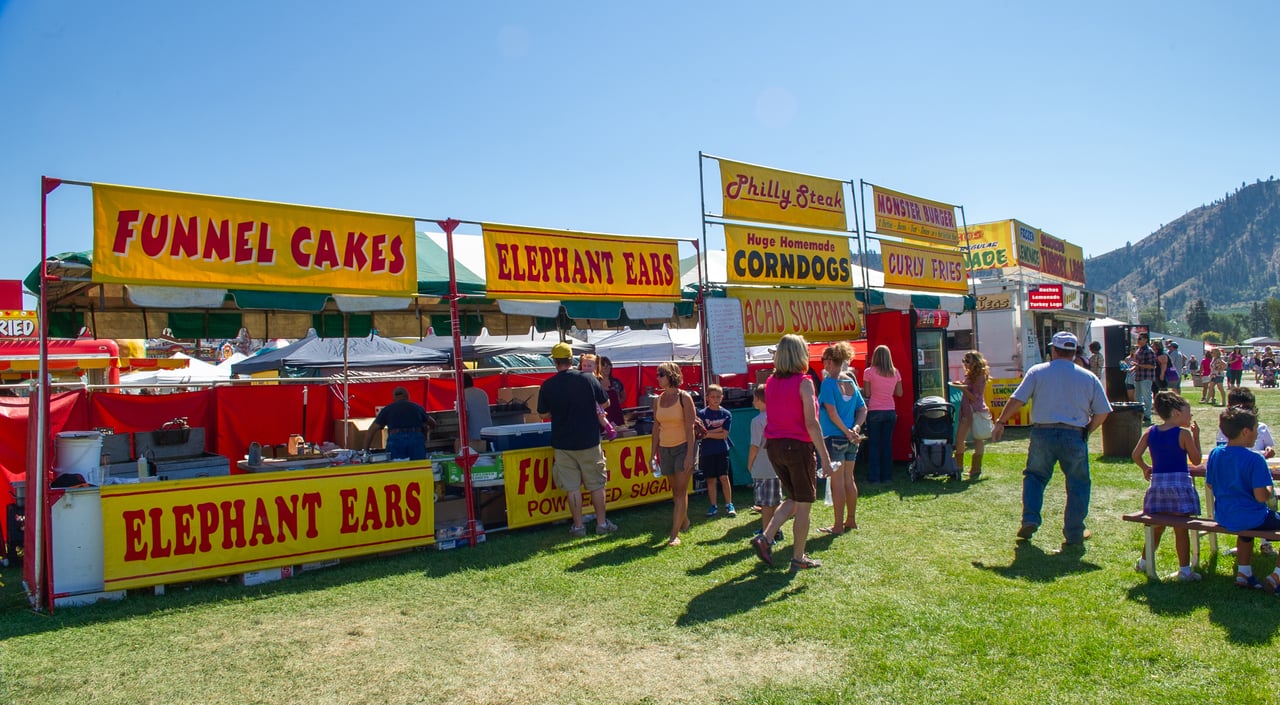
The tournament calendar that dominates Mardon's summer has already wrapped for the year. The American Bass Tournament ran its Washington East Region event on the reservoir in July, and Grant County Fair camping filled the resort in the third week of August. Both are behind us now, which means the crowds that build around those dates have thinned out even as the fishing itself is arguably better than it was during either event.
If you're planning a weekend at the lake, treat the posted summer conditions as expired. Call ahead to MarDon's tackle shop or check their current fishing report before you load the boat, since a launch, a depth, or a hot spot from July won't describe the water you're actually pulling into now. The Beach House still runs live music on weekend nights for anyone splitting time between the water and the patio, and the mini-golf course tucked among the basalt landscaping is still open if you've got a slower afternoon to fill between bites.
None of this is a mystery once you know the mechanism. The reservoir isn't shrinking because something went wrong. It's doing exactly what it does every year, on the same irrigation schedule it's run on for decades, and the fish, the birds, and the boat ramps are all responding to the same falling number on the same gauge. Understanding that turns a lower lake from something to worry about into the best-kept secret of the Mardon calendar.
Whether you're already counting Potholes Reservoir as your regular water or you're the friend everyone borrows a dock slip from, knowing how this lake actually behaves is what separates a good weekend from a lucky one. If the day ever comes when you're thinking about putting down permanent roots on this shoreline instead of just visiting it, Camiekae Lynch knows this stretch of Central Washington the way MarDon's tackle shop knows the dune faces. Find Your Mountain or Lake Retreat when you're ready to make the water your address, not just your weekend.